The Medieval Necropolis of Castelo de Moura
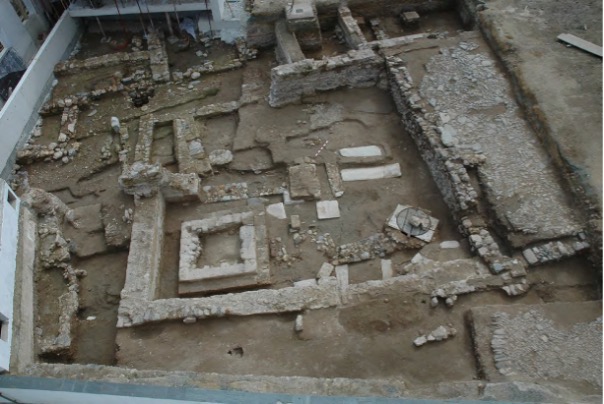
During archaeological monitoring associated with the construction of the Tourist Reception Centre at Castelo de Moura, structural remains belonging to a substantial building were identified. Construction work was subsequently suspended and archaeological excavations revealed that the structure was likely a medieval church, mentioned in mid-16th-century written sources as being dedicated to St James the Apostle.
The Church of St James appears to have been built over a 13th century Islamic mosque. A cemetery was identified around the church, apparently in use between 1232, when Moura was definitively conquered from Muslim rule, and the second half of the 14th century. The church was abandoned and demolished during the second half of the 16th century, when its religious furnishings and sacred objects were transferred to the nearby Church of Santa Maria do Castelo.
The cemetery extends both within the church and, more extensively, across the former narrow Almohad street that surrounded the religious complex. To date, approximately 90 burials have been excavated, most of which date to the 14th century, the period marked by the Black Death.
A preliminary osteological assessment, undertaken immediately after the excavation season, indicates that the assemblage consists predominantly of children and young individuals, with relatively few pathological conditions identified. No individuals over the age of 50 have been identified thus far.
To further our understanding of everyday life, diet, health and mortality among the medieval population of Moura, archaeological investigations will continue. The forthcoming archaeological seasons will a detailed osteological study of the recovered human and animal skeletal remains, contributing to a broader understanding of life and death in medieval Moura.